An answer:
A straight forward derivation (using e.g.
which holds for stable systems with )
yields
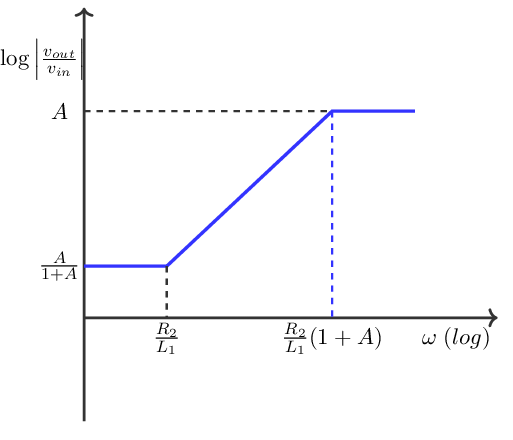
Note that this yields some kind of high-pass characteristic.
An answer:
For a Bode plot, rewriting into a standard form is the easiest. The pole(s) and zero(s) and (here) the DC-voltage gain follow directly.
An answer:
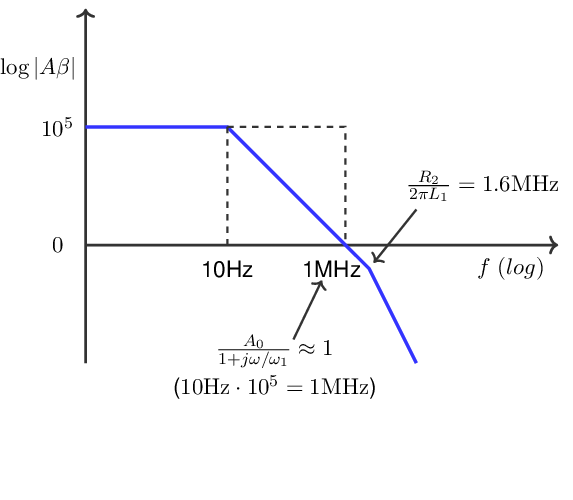
Conclusion: at the second pole () the phase shift of the loopgain is . At the frequency where the loopgain equals 1, the phase margin is larger than .