An answer:
The feedback loop gain contains only the opamp and a resistive divider; resistive dividers do
not add any gain to the loop. Unity gain stable opamps are defined to be stable for any passive
(attenuating) feedback network that provides zero phase shift, the limit being unity feedback.
So this circuit should be stable.
An answer:
An answer:
Towards a standard form:
Or if you do not like the term, you could rewrite into
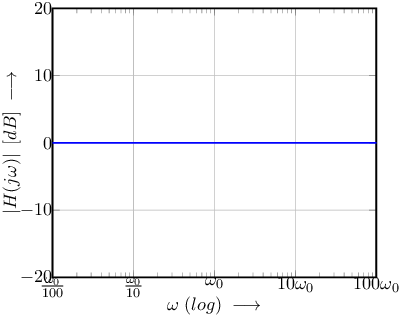
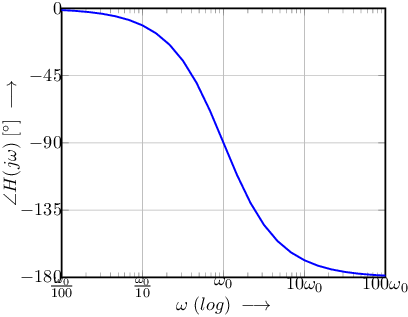
The Bode plot is shown below. From the relations above you can directly derive that the modulus of the gain is unity, and that the phase is between and .